Conditions are already hard for business people in Greece, with the country in its fifth year of recession. Greece imports 40 percent of the food it consumes, nearly all of its oil and natural gas and much of its medicine. Greece runs a primary deficit - spending more than it takes in taxes and by itself it would be shut out of international markets and have no one to borrow from. There are no run on banks to withdraw money because many Greeks have precious little left in the bank. Many have been surviving on [$500] 400 euros a month, which has to cover tax, bills, food and medical costs."
Anti-austerity Greek leftist Syriza party, which was the second-most popular party in elections earlier this month, has grown even more. They are counting on the International Monetary Fund, the European Central Bank and euro zone governments who hold most of Greece's 250 billion euro debt decision to keep things going rather than drop the curtain on Greece's euro dream and absorb the losses themselves. Greeks plunged their country into turmoil by voting overwhelmingly on Sunday 6th May 2012 to reject parties behind an EU/IMF bailout and are defiant to do it again. Greeks say they want a rescue plan that would not hurt the poorest and middle class as much.Greeks want to be on an equal footing with other people and not just slaves of some countries as commented by a Greek worker. Public spending in Greece pension system is at its worse with 35 years of work to earn a full pension. 80% of wages in Greece are in pension payment and are paid out 14 times a year. Greeks get a pension calculated on the last five years of their working life, which tend to be the highest-paid. German, Italian and Portuguese pensions are based on wages worked over a lifetime. Spain bases them on the best 15 years of work.
A 52-year-old teacher in a private school in Athens gets 400 euros ($496) a month from the Greek government, part of her late mother’s state pension. Under the current system, she qualifies to receive the payment for life as the only surviving child of a deceased civil servant, provided she doesn’t tie the knot.
Female civil servants with children under 18 can get early retirement. Unmarried daughters of state workers say the payment became a factor in staying single.
The Greek government has identified at least 580 job categories deemed to be hazardous enough to merit retiring early — at age 50 for women and 55 for men.
Vasia Veremi may be only 28, but as a hairdresser in Athens, she is keenly aware that, under a current law that treats her job as hazardous to her health, she has the right to retire with a full pension at age 50. Greece’s patchwork system of early retirement has contributed to the out-of-control state spending that has led to Europe’s sovereign debt crisis. Greece’s pension system is unsustainable. Greeks won't give it up and the country, save tourism does not have businesses or industries that could drive a recovery by leaving Euro without its debt-cutting targets.
A Greek exit from the 17-nation euro zone, or "Grexit" risks turning the nation into what would be close to a failed state on the edge of the European Union, one of the most prosperous societies the world has ever known. The likelihood of a Greek exit from the euro is now so high that even political leaders committed to avoid it admit preparations are under way.
External link:
Europe, US and the world brace for messy impact from Greece
Forget Greece, China Biggest Risk to Global Economy: Faber
----------------------------------------------
"A penny for your thoughts"
Friday, May 18, 2012
| [+/-] |
Greece on the brink of collapse |
Tuesday, August 24, 2010
| [+/-] |
World Richest Government |
We know the world's richest man is Carlos Slim Helu of Mexico, followed by Bill
Gates and Warren Buffet of USA. How about governments ???
Which countries’ government is the richest (having most money that is, in US$)
If you are expecting North American and European nations, you might be disappointed.
While the countries look rich, wealthy European nations can't withstand a prolonged major financial crisis, just like Greece. The USA might have the biggest economy, but the American government is not at all rich; in fact, it can't even take out $150bn if asked to now without resorting to borrowing.
To date the US government has borrowed $14 trillion !!!
The UK, likewise, while the country/people are rich, the government isn't.
The UK government’s debt stands at $9 trillion now.
World’s Richest Government
Richest governments after 2008-2009 financial crisis:
1. China National reserves: $2,454,300,000,000 2. Japan National reserves: $1,019,000,000,000
 3. Russia National reserves: $458,020,000,000
 4. Saudi Arabia
National reserves: $395,467,000,000
5. Taiwan National reserves: $362,380,000,0
6. India National reserves: $279,422,000,000 POSCO, the worlds 3rd largest steelmaker, signed a memorandum of understanding (MOU) with Pohang City and North Kyongsang Province to build a 100 megawatt (MW) per year fuel cell power plant by 2010 in Pohang. (World's Largest Fuel Cell Power Plant to be Built in S Korea)
7. South Korea National reserves: $274,220,000,000
8. Switzerland National reserves: $262,000,000,000
9. Hong Kong, China National reserves: $256,000,000,000
10. Brazil National reserves: $255,000,000,000Here are the rest, in million US$:
011 Singapore / 203,436
012 Germany / 189,100
013 Thailand / 150,000
014 Algeria / 149,000
015 France / 140,848
016 Italy / 133,104
017 United States / 124,176
018 Mexico / 100,096
019 Iran / 96,560
020 Malaysia / 96,100
021 Poland / 85,232
022 Libya / 79,000
023 Denmark / 76,315
024 Turkey / 71,859
025 Indonesia / 69,730
026 United Kingdom / 69,091
027 Israel / 62,490
028 Canada / 57,392
029 Norway / 49,223
030 Iraq / 48,779
031 Argentina / 48,778
032 Philippines / 47,650
033 Sweden / 46,631
034 United Arab Emirates / 45,000
035 Hungary / 44,591
036 Romania / 44,056
037 Nigeria / 40,480
038 Czech Republic / 40,151
039 Australia / 39,454
040 Lebanon / 38,600
041 Netherlands / 38,372
042 South Africa / 38,283
043 Peru / 37,108
044 Egypt / 35,223
045 Venezuela / 31,925
046 Ukraine / 28,837
047 Spain / 28,195
048 Colombia / 25,141
049 Chile / 24,921
050 Belgium / 24,130
051 Brunei / 22,000
052 Morocco / 21,873
053 Vietnam / 17,500
054 Macau / 18,730
055 Kazakhstan / 27,549
056 Kuwait / 19,420
057 Angola / 19,400
058 Austria / 18,079
059 Serbia / 17,357
060 Pakistan / 16,770
061 New Zealand / 16,570
062 Bulgaria / 16,497
063 Ireland / 16,229
063 Portugal / 16,254
064 Croatia / 13,720
065 Jordan / 12,180
066 Finland / 11,085
067 Bangladesh / 10,550
068 Botswana / 10,000
069 Tunisia / 9,709
070 Azerbaijan / 9,316
071 Bolivia / 8,585
072 Trinidad and Tobago / 8,100
073 Yemen / 7,400
074 Uruguay / 8,104
075 Oman / 7,004
076 Latvia / 6,820
077 Lithuania / 6,438
078 Qatar / 6,368
079 Cyprus / 6,176
080 Belarus / 6,074
081 Syria / 6,039
082 Uzbekistan / 5,600
083 Luxembourg / 5,337
084 Guatemala / 5,496
085 Greece / 5,207
086 Bosnia and Herzegovina / 5,151
087 Cuba / 4,247
088 Costa Rica / 4,113
089 Equatorial Guinea / 3,928
090 Ecuador / 3,913
091 Iceland / 3,823
092 Paraguay / 3,731
093 Turkmenistan / 3,644
094 Estonia / 3,583
See also List of countries by GDP (PPP) per capita
List of heads of state and government by net worth
Wednesday, July 22, 2009
| [+/-] |
The Legitimate Future of New Pirate Bay |

Wayne Rosso, whose Global Gaming Factory X AB company is buying The Pirate Bay for 60 million Swedish SEK (£4.7 million, 7.8 million USD) in August. He is currently working with London music executives to create a viable legal version of the notorious torrent website. Pirate Bay four founders and hosts were jailed and fined for copyright infringement offences. (On 17 April 2009, Peter Sunde, Fredrik Neij, Gottfrid Svartholm and Carl Lundström were found guilty of assistance to copyright infringement and sentenced to one year in prison and payment of a fine of 30 million SEK (app. 3,620,000 USD; 2,385,000 GBP; or 2,684,000 EUR), after a trial of nine days.) The defendants have appealed against the verdict and the judge was accused of bias. Despite the trial the website has been unaffected.
The Pirate Bay is a Swedish website that indexes and tracks BitTorrent (.torrent) files. It bills itself as "the world's largest BitTorrent tracker. Launched in 21 November 2003 it has revenue from advertisements, fees, donations & merchandise.
On 31 May 2006, the website's servers, located in Stockholm, were raided by Swedish police, causing it to go offline for three days. According to the Los Angeles Times, The Pirate Bay is "one of the world's largest facilitators of illegal downloading", and "the most visible member of a burgeoning international anti-copyright—or pro-piracy—movement".
The Pirate Bay's new regime will offer fans unlimited legal music downloads for a small monthly fee, though a hierarchy uploading scheme could see users' fees lessened depending on how much they use the site. Under a "cloud" network system, users will be encouraged to dedicate their own hard drive space to the site. The more of your computer resources you contribute to the network, the less you pay down to zero. Majority of The Pirate Bay's income is to come from selling the computer power gained from the cloud scheme saving Internet Service Providers' (ISPs) resources. VIA
Tuesday, July 21, 2009
| [+/-] |
Asian employment at risk in prolonged downturn |
Asian reliance on exports and rising commodity prices is running a challenging rising unemployment but lower levels than in major economies for now. Many Asian economies rely on exports to the United States and Europe to drive growth. But if demand is falling and consumers are losing their jobs, there can be little upside for supplier. Nomura economists said in a report on Asian economies that Hong Kong, Korea, Malaysia, Singapore, Taiwan and Thailand are most exposed in Asia to the global crisis.
All are registering double-digit peak-to-trough declines in GDP growth and the impact on the region's economic activity as a whole is now worse than during the Asian crisis, it added. Spending power throughout Asia are eroded where exporters under pressure to cut costs as consumers in recession-hit economies cut spending. This vicious cycle is offset in Indonesia, China and India by their large domestic sectors to buffer their economies against the slump in world trade. Though these economies may avoid recession, growth will slow. Singapore's jobless rate is at a three-year high of 3.3 percent, South Korea's is at 3.9 percent, its highest in nearly four years, and in Japan unemployment has hit a 5-½ year high of 5 percent.
Cutting jobs in Asia can be difficult with the social stigma attached to cutting jobs, labour laws and a lack of a social security safety net make layoffs a difficult process. Take for example loss-making Jet Airways in India. It sacked 800 flight attendants but after protests and political pressure the workers were reinstated and the chief executive apologised to staff within days.
Beyond unemployment, there is also disguised unemployment, where more people are employed to do a job than are needed, and underemployment, where workers are not fully utilised.
Thailand, Malaysia and Japan are taking similar steps to South Korea's government who is giving tax benefits and other advantages to companies that keep or add jobs by "adjusting" wages and work hours.
Hitachi Ltd, Japan's biggest industrial electronics group, and Cathay Pacific Airways Ltd are trying to keep jobs by asking staff to take unpaid leave.
Unemployment can be a leading indicator of a prolonged slump when there is uncertainty about whether a recovery will be quick, slow of occur at all. Employers wait to see that the upturn is sustainable before making a commitment to hiring new staff in coming out of a downturn. People who have lost their jobs don't have the spending capacity they did while employed. Those still in jobs rein in their spending and increase their savings in case they are next.
The fall in commodity prices since last year had reduced business costs and improved profit margins for Asian firms, limiting the need to cut jobs but with the recent rise in oil prices raises the risk that firms in Asia face greater pressure to lay off workers. Profit margins would be squeezed as raw materials prices rise just as manufactured goods are under pressure to fall. China's growing demand for commodities may push up raw material prices globally and therefore undermine prospects for a global recovery, especially in developed markets. VIA
Read Managing the Global Workforce
Download-- Charles M. Vance, Yongsun Paik
"Managing a Global Workforce: Challenges And Opportunities in International Human Resources Management"
M.E. Sharpe | 2006-08-30 | ISBN: 0765610698 | 399 pages | PDF | 1,4 MB
Friday, April 17, 2009
| [+/-] |
Yahoo and Microsoft Corp. resumed partnerships talks yet again. |


In recent weeks, the Wall Street Journal said Yahoo and Microsoft were still discussing a deal in which Yahoo would outsource its entire search engine to Microsoft to cut costs. Talks have also included more limited scenarios, such as agreements in which Yahoo would sell some premium display advertising on Microsoft's Web sites while Microsoft would sell ads next to Yahoo search results. Yahoo CEO Carol Bartz and Microsoft CEO Steve Ballmer(Picture) met 5th -11th April, 2009 week as part of the discussions. Yahoo and Microsoft declined to comment.
Microsoft tried to buy Yahoo in early 2008, but its unsolicited $44.6 billion offer was denied by its ex-CEO, Jerry Yang. See Yahoo Inc. has rejected Microsoft bid on its online
VIA
Thursday, April 9, 2009
| [+/-] |
The Demise of the Dollar |

China has rapidly accelerated its monetary situation. Asia as a whole holds the foreign reserves ransom while the Euro, not even a decade old, continues to strengthen. Critical analysis now illustrates a number of fatal cracks in the tax cut plan: the tax cuts were too long-term to effect an immediate and necessary economic and dollar push; national debt continued to escalate out of control; and Social Security and Medicare costs increased. The war has contributed unheard-of debt. The only reason, according to many economists, that the U.S. has any global monetary power is the fact that so much of the foreign reserves are still heavy with U.S. greenbacks; in this lies dollar value.
The GW Bush trade deficit is driven by an imbalance of cheap imports to expensive exports, in which the current administration prefers to blame on Asia’s undervalued currencies, specifically the Japanese yen (JPY) and the Chinese Yuan. The Yuan, the unit of Chinese currency, has affected American workers, whether they know it or not.
China holds one of the biggest chunks of dollar denominated currency second only to Japan.
The U.S. has challenged the Chinese government’s strategy which seeks to keep its own currency undervalued, a benefit to their growth. And up until 2005, the Chinese Yuan was pegged, or fixed, to the U.S. dollar, a design that both former and current Treasury Secretaries Hank Snow and Henry Paulson, respectively, vigorously railed against. An undervalued Yuan is stronger internationally than the strong dollar. China as a key attribute in the dollar’s tumble is pure speculation. Financial power and international leverage may best describe the Chinese foreign reserves, then and now.
As of the close of 2006, most financial reports were identifying the total value in circulation of the euro to be rapidly gaining, if not overtaking, the dollar denominations. The economics of England run similar to the U.S.’s in war and general national debt, the trade deficit is substantial, consumers are in personal debt up to their eyeballs, and the housing market went bust well before the U.S.’s. Economically this all adds up to a weak currency.
China & Japan has vigorously stockpiled dollar denominated currencies in its foreign reserve since the Asian financial crisis of the 90s as their best defense to any further economic tremors was to fatten federal reserves full to the rim with U.S. dollars. Regardless of the size of Asian reserves, the yen poses little challenge to the value of the U.S. dollar.
Whether in response to direct U.S. government maneuvers or as a result of inevitable economic maturation, the dollar has been shaken by financial globalization. Excerpts from Forex BlogJohnny 'Silver Bear' comments that the Federal Reserve has kept the printing presses rolling too liberally for too long and he continues: "The Fed has lost control of the dollar. Their mindless creation of credit has insured a mind-boggling meltdown of the entire financial system. This is not a good thing for anyone, anywhere. The dollar is the world's reserve currency. Seventy-five percent of all dollars in existence are in foreign hands. Whatever their value was when those foreigners got them, that value is evaporating right before their eyes. It's like buying ice by the pound and watching it melt away before you have time to use it."
Read more at Is The Demise Of The Dollar Coming And Will It Usher Opportunities For New Forms Of Economic Transactions?We are rather concerned about the U.S. dollar as it has been in the interest of other countries to have a strong dollar to export to U.S. consumers. The dollar nearly halved between October 2000 and the spring of 2007 versus the euro; it has since rebounded a bit, but make no mistake about it: the U.S. dollar has been in a long-term downward trend. We all rely on cash for liquidity, but are concerned about purchasing power. While we are told that equities outperform in the long run, the deflationary forces in the equity markets, and the threat of a depression, has many looking for ways to avoid systemic risk affecting equity markets. While there are deflationary forces, there is also the threat of inflation because of the governments' efforts to restart the economy; as a result, investors do not want interest and credit risk, either. Is physical gold the only answer? Possibly, but even the staunchest gold bugs rarely ever invest all their net worth in gold, if for no other reason than it is impractical. The principal motivation to invest in other currencies is to diversify based on concerns that the U.S. dollar's purchasing power may not hold up and that - on a relative basis - it may hold up better in other currencies. We have long promoted baskets of currencies to mitigate the risks associated with the policies of any one country's monetary policies. The Euro - Are There Any Hard Currencies Left?
Japan's finance minister said Thursday Feb 26, 2009 that a stable dollar was in the interests of Asia's largest economy but downplayed the chances of Tokyo intervening to prop up the currency. "The US dollar is in fact the world's base currency now and there's nothing to replace it," Kaoru Yosano said in parliament. The dollar dipped against the euro on Thursday as investors fretted once more over the plight of the troubled U.S. banking sector, analysts said.The euro also gained ground despite consumer and business confidence slump in the European Commission's economic sentiment indicator for the 16 countries sharing the euro fell to 65.4 points in February, a drop of 1.8 points from January's figures, the lowest level since the survey began in January 1985. Dollar dips against euro on US bank concerns
The Demise of the Dollar...and Why It's Great For Your Investments by Wiggin, Addison 
"The good news is that hidden investment opportunities are waiting behind the weakening dollar. In The Demise of the Dollar ... and Why It's Great for Your Investments Wiggin offers advice to readers looking to capitalize on this reality; specifically, he encourages investing in precious metals, tangible resources, and some select foreign markets." Link1 --- Link2
The Demise of the Dollar...
By Addison Wiggin, Chuck (FRW) Butler Preview Link
Tuesday, March 24, 2009
| [+/-] |
Britain's long loved pubs under closure threat |

The Great English Drinkers and Their Times, Britain's national pastime in taverns and inns coming to an end? The British Beer and Pub Association (BBPA) released startling figures in the first week March that there are now 39 pubs closing in Britain each week. The closure rate has been creeping upwards for the past six or seven years. The Campaign for Real Ale (Camra) asserts that about 2,000 pubs have closed in the past 12 months, with the loss of 20,000 jobs. Factors leading to pub closures are:1)Smoking ban 2) Pints of beer will be followed by cups of tea at closing time 3) higher alcohol duties 4) the wide availability of cheap beer and wine in supermarkets and corner shops 5) converting the underperforming pub building into flats could bring more money 6) weakening consumer confidence. 7) soaring utility rates.
Tim Haworth, an antiques dealer, and his wife Alison revived The Bear At Home which was named Oxfordshire's Pub of the Year by Camra in 2007. They transformed it to a profitable pub by opening seven days a week, providing good food not ridiculously expensive, held a beer festival to help to celebrate Moreton Cricket Club's 150th anniversary last year, allocating beer garden for traditionalists who can play Aunt Sally while neophytes can log on to the pub wi-fi - a homely boozer good for family, dogs, hikers, bikers, whoever. 
Co-editor of The Good Pub Guide, Fiona Stapley believes that the pubs best placed to survive are those that diversify. A lot of pubs are starting to open for breakfast, as well as offering internet facilities or running shops. These are the pubs that are going to survive: pubs with hard-working, flexible landlords who really care about their pubs and really care about their customers. For rural pubs, diversification often means broadening the business (like providing post office service) far beyond the traditional parameters of selling beer and packets of prawn cocktail crisps.
Many old haunts have gone to the wall. People are more and more becoming isolated in their homes and ordering in Pizza's, takeaways, drink etc. Many shop on line even for groceries. Drinking pints at home (where you can smoke if you must) instead of down the pub. How acurate was the film Soylent Green?.
Via 1
V1a 2
| [+/-] |
Cuba awaits its oil boom and runs short on cash |


The U.S. Geological Survey in 2005 estimated that as much as 9.3 billion barrels of oil could lie off the island's north coast, while Cuban geologists put that number at 20 billion barrels in October 2008. For the deep-sea oil, Cuba needs the technical expertise of major western oil companies to get to any of the unexploited crude but on Feb. 7 the U.S. marked the 47th year of a trade embargo that has blocked producers with the technical ability to drill that deep, denying Cuba what could be a massive windfall. U.S. law also forbids international companies from investing in expropriated American property in Cuba and could penalize offenders by revoking travel visas or restricting access to drilling contacts in the U.S. portion of the Gulf. Cuba now imports about half the roughly 200,000 barrels of oil consumes a day at a discount from leftist ally Venezuela. The much needed foreign currency as an oil exporter state to modernize its communist economy where wages that average less than a dollar a day is thus hampered.
The much needed foreign currency is exacerbated by falling prices for nickel, Cuba's top export. Also the Soviet-era equipment the island traded Moscow for sugar needed to be replaced. Havana needs hard currency for President Raul Castro to raise state salaries, which support about 90 percent of the island's working population on an average $19.70-a-month wage. The island akso badly needs cash to buy the food it distributes as part of monthly rations, and to import scarce construction materials to combat a housing crisis exacerbated by last year's storms.
This video shows the rolling style of the roller which is much better than the Dominican Cohiba roller. In Dominican Republic they use a bunching machine so they can roll many more cigars in one day, but you dont get the same quality of properly spaced filler leaf. However, the tobacco in the Dominican Cohiba is aged, and fermented much more than in Cuba so the taste is better.
U.S. oil majors sitting on huge stacks of cash are desperate to expand their buisness to Cuban oil awaiting Obama's policy in U.S.-Cuba relations to raise restrictions on U.S. investment in Cuba. VIA
Monday, March 23, 2009
| [+/-] |
Global Bank, Global Currency Within 15 Years |
The financial crisis will lead to the creation of a global central bank and a global single currency within 15 years as according to the head of market analysis for Schneider Foreign Exchange Stephen Gallo. Gallo said one of the things that caused the financial crisis was an over expansion of the money supply on a global basis and that central banks are going to need to pay more attention to what’s going on with the global money supply rather than the money supply just in their own borders.
British Prime Minister Gordon Brown, EU heads such as Joaquin Almunia and establishment media outlets like the Wall Street Journal amongst many others have all used the economic crisis as an excuse to argue for greater financial power. Or is it that the globalists’ call for a centralized global economic order has nothing to do with providing solutions to the crisis but everything to do with providing themselves with more power and control over the world financial system?
American congressman Ron Paul have tirelessly argued that the only way to solve financial crisis is to work, produce and save - not to create credit out of thin air. Paul stressed that capital could not be created out of thin air by the Federal Reserve but to work hard, produce, live within our means and what is left over is called capital, contrary to telling consumers to spend and continue the process.
VIA
| [+/-] |
U.K. largest drop in house prices on record |

U.K.land Registry house recorded prices dropped by a record 15.1 per cent in January 2009 compared with a year ago. It is the largest drop since the Land Registry began its records in January 1995. The average property now costs £156,753, having dropped 0.8 per cent during last month. House prices in London and Wales have been particularly badly hit, dropping 14.1 per cent and 19.7 per cent respectively. During the year to November 2008 the drop-off in housing sales fell by 67 per cent from 33,404 from 100,730 in England and Wales. n London, only 3,504 house sales were completed in November 2008 compared with 12,719 in November 2007, representing a fall of 72 per cent. The actual drop in house prices could be worse and due to the lack of affordable mortgages and rising unemployment amid the credit crisis sales would remain low as to economists point of view. VIA
Friday, March 6, 2009
| [+/-] |
Asian budget airlines launch price war |

Amid the global economic downturn Singapore-based Tiger Airways, which flies to destinations in Southeast Asia, Australia and China, announced Tuesday 3rd March 2009 it would launch summer fares starting at about 16 US dollars, including taxes.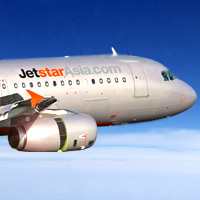 Jetstar Asia, another Singapore-based budget airline, said it had extended until August 16 a promotion to beat the cheapest price offered by rivals. Under the promotion, should a traveller find another published online fare cheaper than the lowest available on www.jetstar.com, the airline will beat the price by 10 percent if the customer makes an instant reservation by phone.
Malaysian budget airline AirAsia also has its "take me away" promotion which offers is a one-way flight from Singapore to Bangkok starting from 43 dollars, inclusive of taxes, for travel from March 23 to September 11. It is also offering a number of tickets starting from 26 cents for travel within Malaysia. Comparatively, a return flight to Bangkok on Singapore Airlines costs 337 dollars, inclusive of taxes. Thailand's Nok Air is offering one-way fares for as low as 25 cents, excluding taxes and fees, for domestic flights for those travelling from May 15 to September 30. Indonesia's Lion Air is selling a one-way trip from Singapore to Bali for as low as 5.80 dollars for travel from June 1 to September 30, according to its website.
VIA
Tuesday, March 3, 2009
| [+/-] |
Yahoo Climbs as Fourth-Quarter Earnings Top Estimates |

Just days after Carol Bartz, 60, took over in the month Jan 2009 as chief executive officer from Jerry Yang, who stepped down after Yahoo’s rejection of a $47.5 billion offer from Microsoft Corp. rankled investors last year, the company said it would freeze pay for many employees. Carol Bartz, in her first earnings conference call as chief executive officer, said she would consider offers to buy the company’s assets, while adding that she didn’t come to Yahoo with the intention of selling it. With the recession deepening, Yahoo is slashing costs. Yahoo! Inc., owner of the second most popular U.S. search engine, surged 7.9 percent in Nasdaq trading on Jan. 28 after fourth-quarter earnings beat analysts’ estimates, buoyed by job cuts and rising domestic sales. Excluding fees passed on to partner sites, sales were $1.38 billion, meeting projections. Yahoo rose 90 cents to $12.24 at 4 p.m. New York time on the Nasdaq Stock Market. The shares declined 48 percent last year. Fourth-quarter sales increased 2 percent to $1.34 billion in the U.S., Yahoo said. International sales declined 10 percent to $468 million. Yahoo’s worldwide revenue from search ads climbed 11 percent last quarter as users submitted more queries, Chief Financial Officer Blake Jorgensen said on the call. Sales of display advertising declined 2 percent, he said. Yahoo depends more heavily on display ads than search advertising, where Google leads, Jeffrey Lindsay, an analyst with Sanford C. Bernstein & Co. in New York. said. VIA
Related Posts:
Microsoft Corp bid for Yahoo
Yahoo Inc. has rejected Microsoft bid on its online search operations
Monday, March 2, 2009
| [+/-] |
World economy may lose 51 million jobs |

In the worst-case economic scenario, the Global Employment Trends report said 51 million more jobs could be lost by the end of this year, creating a 7.1 percent global unemployment rate. More realistically, the International Labor Organization (ILO) said 30 million more people could lose their jobs if financial turmoil persists through 2009, pushing up the world's unemployment to 6.5 percent, compared to 6.0 percent in 2008 and 5.7 percent in 2007. Caterpillar, Sprint, Philips, Texas Instruments and ING are among the companies that have cut thousands of jobs in response to the financial crisis and economic downturn that has spread around the world. Developing countries will suffer most from additional job losses, according to the ILO, whose governing structure includes governments, employers and workers groups. North Africa and the Middle East had the highest unemployment rate at the end of 2008, at 10.3 percent and 9.4 percent respectively. Central and southeastern Europe and the former Soviet states ended last year with a jobless rate of 8.8 percent, sub-Saharan Africa's was 7.9 percent and Latin America's was 7.3 percent. East Asia fared best of the world's regions at 3.8 percent. Labor-based approaches can generate jobs and much-needed infrastructure quite quickly in poorer countries with high levels of joblessness. VIA
Related Topic: Up to 26 million China rural migrants now jobless
| [+/-] |
Up to 26 million China rural migrants now jobless |


The Chinese government announced Monday Feb 2,2009, as many as 26 million of China's estimated 130 million migrant workers are now unemployed with declining demand for Chinese toy, shoe and electronics exports overseas. Zhang Quanshou, an agency director in the southern manufacturing powerhouse of Shenzhen, said he was seeking to adjust to the situation by first providing factory jobs to young women, seen by employers as more efficient at assembly line work. as China's economic growth — once red-hot — plunged to 6.8 percent in the final quarter of last year reversed China's long economic boom which provided migrant work, allowing millions of farmers to escape to factory jobs in better developed coastal regions. In a country where migrant workers contribute 65 percent of the average rural family's cash income, raised fear among Communist leaders of spreading unrest. Authorities have moved quickly to placate protest at factory shutdowns or to demand back pay by laysoff, in some cases using public funds to pay workers after factory owners run off.
In comparison, U.S. statistics in December showed an estimated 11.1 million Americans were without jobs, a rate of 7.2 percent unemployment that represents a 16-year high. Adding to the pressure in China are millions of urban workers laid off amid the reform of moribund state industries in recent years and college graduates soon to be entering the work force.
Premier Wen Jiabao also said of possible plans, which would follow a 4 trillion yuan ($586 billion) package unveiled in November with heavy spending on public works projects in the hope of easing the unemployed pressure.
VIA
Related Topic: World economy may lose 51 million jobs
| [+/-] |
Chinese House Hunters Tour U.S. in Search of Sweet Deal |

On Feb. 24 a special Chinese tour group, the first organized group trip, is heading to the United States in search of cheap homes to buy. Price favourably declines in four major cities at Boston, New York, San Francisco and Los Angeles attracts the tourage for investment property and housing their children could use when they go to the USA to study or work with budget: $300,000 to $800,000 apiece.The bargain hunters are paying $3,600 each for the trip to Soufun.com, China's leading real estate website and the trip's organizer. These cities are chosen because of their large ethnic Chinese communities and because they have a large number of universities.
Cash-rich China, whose purchases of U.S. Treasury notes help prop up the federal government, is looking to recession-stricken America also for looking for U.S. firms on the skids at the right price. Including talent where headhunters have been scouring America's decimated financial sector mostly for ethnic Chinese executives. But houses are assets that individual Chinese with money can try to cash in on.
The Chinese view China is still a country run by the Communist Party, which inherently distrusts private property. The party's power is more than the rule of law. That is scary, and they cannot be sure about changes in the future. The U.S. market and social system are more stable.
Shen Yue, a Chinese film producer sees the U.S. subprime crisis positively where U.S. houses are down by 20% or 30% — even more than the price falls in China, where the Chinese may be a big help to Americans saddled with mortgages they cannot pay. He says there are several hundred thousand Chinese like him who easily can pay up to $500,000 for a house.
Dan Harris, a Seattle lawyer and co-writer of the popular China Law blog express concerns that the beliefs that by buying property in the U.S. will increase one chances of getting a visa is not true. Harris also worries Chinese buyers may end up with the wrong kind of bargain, such as a foreclosed crack-house(used by drug dealers or prostitutes). professor Wang Hongxin, director of the Real Estate Research Institute of Beijing Normal University warns that some of the group (of Chinese buyers) may underestimate the challenges of investing overseas, as they are unfamiliar with the U.S. culture and system. He also added that the Chinese real estate market has the greatest potential worldwide and though currently it is not as hot as in previous years, but the rates of return will still be higher than other markets.
VIA
Sunday, March 1, 2009
| [+/-] |
Miami banker gives $60 million of his own to employees |
 Picture:This is Leonard Abess, CEO in the lobby of the bank.
Leonard Abess sold a majority stake in Miami-based City National Bancshares to the Spanish bank Caja Madrid of a 83 percent stake last November for $927 million. The generous Miami banker took $60 million of the proceeds and hand it to his tellers, bookkeepers, clerks, everyone on the payroll (399 workers on the staff abd 72 former employees ) as a one-time bonuses. For longtime employees, the bonus - based on years of service - amounted to tens of thousands of dollars, and in some cases, more than $100,000. Virginia C. Dunn, managing senior vice president said it was better than a lottery because it came from someone's heart.
VIA
Saturday, January 17, 2009
| [+/-] |
Firm hires a witch to hunt debt dodgers |

The Vilnius-based firm has hired Vilija Lobaciuviene, 53, the Baltic nation’s most famous self-styled witch, to hunt down companies and individuals who are failing to pay their debts amid the credit crunch. Lobaciuviene, who describes herself as “Lithuania’s leading witch,” is renowned in the former Soviet republic of 3.4 million people for providing such “magical” services as predicting the future and casting spells. She claims to use hypnosis, herbal medicines and “the bio-energy field” when helping her “patients.” VIA

Friday, January 16, 2009
| [+/-] |
America raising A Trillion Dollars for Recovery Operations Without Raising Taxes |

Joe Rothstein (joe@ipdgroup.com.) said it is possible for the new president to raise for the needs of at least a trillion dollars to clean up the wreckage left by the old president. And Obama needs to get that money without raising taxes which is not a problem.
1)Getting back money the wealthy have been hiding from the tax collectors.
In the January 9 New York Times the Swiss bank UBS is closing the hidden offshore accounts of its well-heeled American clients, potentially allowing their secrets to spill into the open, under pressure from federal authorities. UBS will shut about 19,000 accounts that prosecutors suspect have gone undeclared to the Internal Revenue Service. It all stems from a Florida judge's order dating back to the summer of 2008 and the confession of a former UBS banker that he helped clients defraud the government of tax money. He did this on behalf of Igor Olenicoff, who Forbes magazine once ranked as the 286th richest person in the U.S. Olenicoff has since paid over $50 million in back taxes. A Senate committee reported last year that the U.S. treasury loses $100 billion a year to secretive offshore tax havens. And that's just one slice of the money stashed away around the world from tax evasion and illegal activities. Conservative estimates put the number of shell companies who bank in these no-tax places at over 300,000. Given the general world economic meltdown, governments are much more willing to cooperate on ways to dislodge sheltered money. A few years ago the Organization for Economic Cooperation estimated that $3 trillion was hidden from the group's 21 member countries. At the time of the report that amounted to nearly 10% of the world's GDP.
2) Amend legal tax preferences the U.S. generously provides to companies that move their operations and jobs overseas.
A blatant loophole that lets U.S. companies defer taxes on their profits until they transfer them back to the U.S. The U.S. lose the jobs and economic activity that go with those companies and also lose the taxes on the outsized profits those companies make by moving into cheaper labor markets. Most estimates peg this lost revenue at about $100 billion.
3) The health sector is another big target for money.
Obama estimates that there's a $200 billion savings to get back subsidies that the U.S. gives to health insurance companies to help them compete with Medicare. Another $25 billion or so can be saved by letting Medicare negotiate with the drug companies for lower prescription drug prices. In one of the more bizarre things the Republicans did while they held the majority in Congress, they banned Medicare from negotiating for lower prices. Making medical records computer based will bring savings that are estimated to be enormous, $200 to $300 billion a year which Obama pledged to make it happens within five years.
4) Big oil and the combination of tax breaks and other unneeded incentives taxpayers give to an industry that consistently makes enormous profits need to be looked into.
5)Tax breaks for everyone making more than $250,000 a year.
Obama has promised to repeal this.
VIA
Wednesday, January 14, 2009
| [+/-] |
Guitar Hero III $1 billion game in sales |

Guitar Hero III: Legends of Rock is a music video game developed by Neversoft and published by Activision and RedOctane. It was revealed that Guitar Hero III: Legends of Rock has become the first single video game to surpass $1 billionin sales. Guitar Hero: Aerosmith had sold three times as many copies as the band's last album during their respective first weeks, musicians whose music is featured in the game has seen a rise in music sales to the tune of 15-843 percent.
Guitar Hero III: Legends of Rock retains the same gameplay as the other games in the series. The player uses a special guitar-shaped controller to simulate the playing of rock music by playing in-time to scrolling notes on-screen. Guitar Hero III includes a new cooperative career mode and "Boss Battles" against both in-game characters and other players; the game is also the first in the series to allow for online play for the Xbox 360, PlayStation 3, and Wii versions. The game features over 70 total songs shipped on disk, many of which, in contrast to previous games, are master tracks. The Xbox 360 and PlayStation 3 versions also feature the ability to download additional songs. Several musicians appear in Guitar Hero 3, including Tom Morello (of the bands Rage Against the Machine and Audioslave) and Slash (of the bands Guns N' Roses and Velvet Revolver) as in-game characters. The PC, PlayStation 3, and Xbox 360 versions also include Bret Michaels (of the band Poison).
VIA
Thursday, January 1, 2009
| [+/-] |
America's longstanding to-do list |

1)Infrastructure - U.S. haven't even kept up with basic maintenance and safety considerations for existing roads, bridges, water and sewer systems and the like. The American Society of Civil Engineers estimates that there are $1.6 trillion behind in just bringing U.S. infrastructure up to reasonably good condition---never mind considerations for bold, expensive new projects.
2) Education - U.S. has slipped in terms of educational achievement. A lot of substandard schools are about to get money needed to make them safe and habitable and equipped for 21st century education. Pre-school education will get more support and college will become more affordable. And from the leaders of organized teachers unions, there is these days a willingness to consider needed changes in tenure and work rules in exchange for higher pay and better working conditions.
3) Health care - The U.S. is the only developed country in the world without some form of universal health care.
4) Energy - In 2000 the Germans enacted a law requiring utilities to buy a portion of their power from solar companies. That decision has helped Germany---not the sunniest of countries---to become the world's solar leader, creating nearly 100,000 new jobs. The U.S. has yet to make a major commitment to alternative energy development. But $4 gas combined with rising tensions in the Middle East have melded a clear constituency for solar, wind, biofuels and other non-carbon alternatives.
5) Sound economic management - Hedge funds are essentially unregulated and have thrived by producing outsized returns for their investors. They buy companies and then try to quickly run up profits by closing down “excess” capacity, laying off workers and squeezing their properties for short terms gains. Then they “flip” them---selling them for more than they paid because of improved balanced sheets. Hedge funds shouldn't be allowed to run roughshod over workers and communities to make huge short term profits for a few already wealthy investors. Hedge funds shouldn't be allowed to operate with favorable tax treatment and few regulatory or disclosure requirements. America shouldn't be rewarding companies that ship jobs overseas and strip the U.S. of its manufacturing base.
America middle class income has declined over the past 30 years. while the top one percent has thrived. Now, in 2009, with unemployment about to go to 10% and all of the other ills known are coming, Congress is going to be forced to re balance the game in favor of workers.
Now, because things are so bad, it looks like America might do what they should have been doing all along. VIA


